
Web Desk (LTN NEWS): On Thursday, the army’s top leaders hinted that they might take a tougher stance against the banned Tehreek-i-Taliban Pakistan (TTP) and emphasized that anti-terrorism operations would continue in Khyber-Pakhtunkhwa and Balochistan.
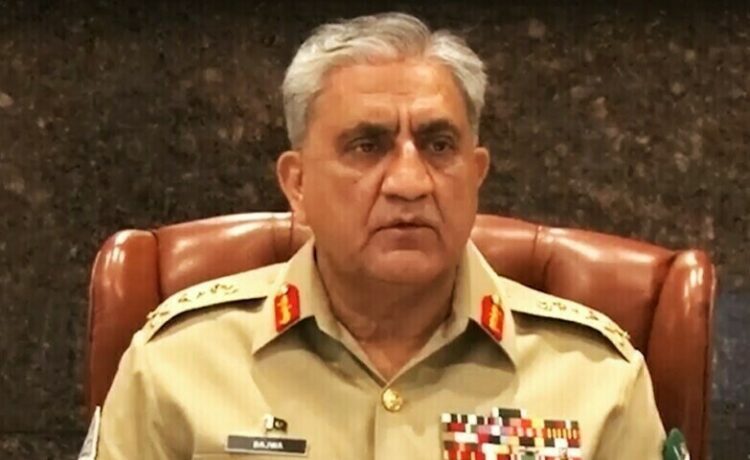
Army Chief Gen. Qamar Bajwa told the 250th Corps Commanders’ Conference, which happens every month at General Headquarters, that “formations must maintain operational readiness and efforts to fight terrorism in KP and Balochistan must continue.”
The army’s work to help people affected by floods and the security situation was at the top of the list of things to talk about at the meeting.
The ISPR press release about the conference didn’t say anything about how much attention was paid to operations to stop terrorism.
All general officers in the Pakistan Army will give one month’s pay to help with flood relief.
Operations against Baloch insurgents (in Balochistan), the Gul Bahadur group (in KP), and other militant groups have been going on.
Since Eidul Fitr, however, fighting between security forces and the TTP has stopped, though it hasn’t been announced by Pakistani security forces.
At the moment, there is a three-month truce between the two sides while their representatives talk about making peace.
Gen Bajwa’s statement that the “kinetic operations” will continue in KP and Balochistan provinces comes as public anger over the return of TTP fighters grows.
Many people think that the TTP fighters came back as part of the peace talks that are still going on.
The TTP militants were seen in the Matta area of Swat earlier this month, and there was at least one report of a fight between them and law enforcement.
In the same way, their presence has been seen in North and South Waziristan, where there have been more targeted killings and kidnappings.
This has caused people in Swat and North Waziristan to protest against the TTP.
Gen Bajwa’s statement came at the same time that peace talks in Afghanistan were getting difficult. Both sides are losing trust in each other, but neither wants to give up on the talks.
It is widely suspected that the TTP has begun extending active support to the Gul Bahadur group in its attacks on security forces. The group does not, however, say that it was behind these attacks.
The TTP has said that two of its militants who were killed in North Waziristan were killed by security forces.
In a statement released earlier this week, the terrorist group said that it was about to lose its patience.
The fact that the TTP’s top leader and spokesman, Omar Khalid Khorasani, was killed by a bomb in Afghanistan is also causing trouble for the group.
At the same time, Taliban Interior Minister Sirajudddin Haqqani, who was mediating talks between the TTP and Pakistan, is under a lot of pressure after a US drone attack in Kabul at the end of last month killed the head of Al Qaeda.
Analysts thought that the COAS’s statement was an attempt to change the way people back home thought about the TTP’s return while also sending a tough message to the terrorist group.
Flood relief efforts
Gen Bajwa praised the army’s efforts to help people affected by the floods and “directed Army Formations to provide all possible help to flood victims,” according to the ISPR. The participants also talked about the flood situation and the ongoing rescue and relief efforts.
“Expressing deep sorrow over the loss of precious lives and extensive damage to infrastructure due to unprecedented rains/floods, the forum resolved to spare no effort to ease the suffering of flood victims,” the ISPR said.
In a separate statement, the ISPR said, “All General Officers of the Pakistan Army have given one month’s pay to help with flood relief.”
Twitter users also noticed that Bahawalpur Corps Commander Gen. Faiz Hamid wasn’t at the meeting. In the video clip of the meeting that the ISPR shared with the public, he could not be seen.
Gen Hamid had just moved from the Peshawar corps to the Bhawalpur corps. Since he was the commander in Peshawar, he was in charge of talks with the TTP.