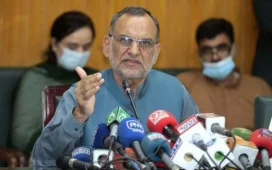

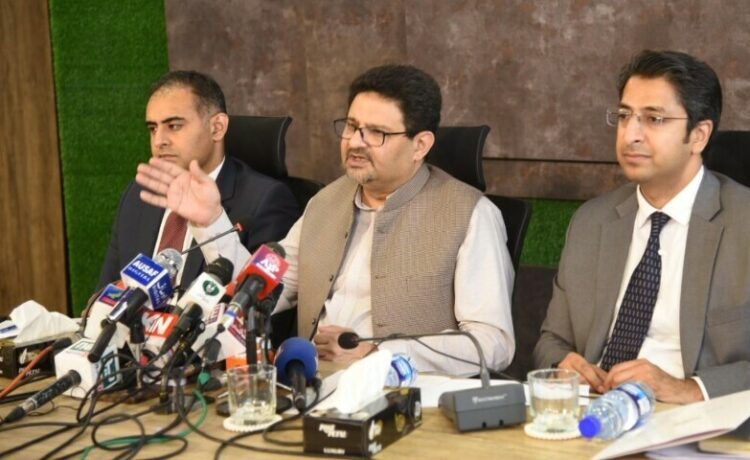
Web Desk (LTN NEWS): The country’s Finance Minister, Miftah Ismail, told Radio Pakistan on Monday that the government could “think about importing vegetables and other food from India” to help people after floods destroyed crops all over the country.
Ismail was answering a question at a press conference in Islamabad when he said this.
In August 2019, Pakistan officially lowered its trade ties with India to the same level as its ties with Israel, with which it has no trade ties at all. The decision was made in response to India’s decision to get rid of Article 370, which gave occupied Kashmir a special status in its constitution.
A source says that Moeed Yousuf, who used to be the security adviser, was working on some ideas for trade with India. Razak Dawood, who used to be an adviser on trade, has also been on record as supporting trade with India.
The Economic Coordination Committee (ECC) said in March 2021 that the private sector would be able to bring in 0.5 million tonnes of white sugar from India and cotton through the Wagah border. But the decision was changed after only a few days because the main opposition parties, PML-N and PPP, which are now in a coalition government, were very upset about it.
Since there was a change in the federal government this year, the Ministry of Commerce said in May that there was no chance that trade that had stopped could start up again.
The response came from the commerce ministry in response to rumors on social media that Prime Minister Shehbaz Sharif’s government was thinking about a plan to start trading again with India.
An official announcement from the commerce ministry said, “Pakistan’s policy on trade with India has not changed.”
But in June, Foreign Minister Bilawal Bhutto Zardari argued for trade and cooperation with other countries, especially India. The foreign minister put more emphasis on working with India and said it was time to switch to economic diplomacy and focus on working with India.
After Bilawal’s comments, the Foreign Office put out a statement saying that Pakistan’s policy toward its eastern neighbor had not changed and that there was a “national consensus” on this.