

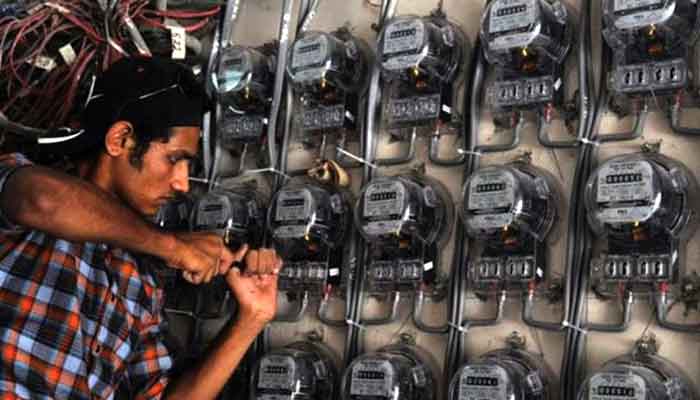
Web Desk (LTN NEWS): People and business owners have been protesting high electricity bills every day. On Wednesday, a local lawyer asked the Supreme Court to tell the federal government to remove the Fuel Price Adjustment (FPA) charges and other surcharges from utility bills, or at least lower them to some degree.
Meanwhile, the Lahore High Court allowed dozens of petitioners to pay only the electricity bill for July, excluding the FPA amount.
Advocate Zulfikar Ahmed Bhutto, who was working for free on behalf of the public, sent a petition to the highest court to bring attention to the huge bills that power companies sent to customers in July and August.
The petition said that in the last few days, people who use electricity in different cities across the country have taken to the streets to protest the FPA and other taxes on their bills because the amount they have to pay has gotten too high for them to handle.
LHC lets dozens of petitioners pay only their July bills, but not FPA.
Citing news stories, the petitioner also said that consumers were setting fire to their electricity bills during protests in different cities and promising not to pay them until the FPA and other taxes were taken away immediately and the power distribution companies sent out new electricity bills.
The petition said that it was sad that the government, instead of making policies that helped people, was putting heavy taxes on poor people who used electricity, which made the lives of even the middle class very hard. Families were already having a hard time making ends meet because the prices of essential goods were going up. The huge FPA and other taxes on power bills broke people’s backs, the petition said, pointing out that most people made between Rs15,000 and Rs20,000 a month and tried to live in rented houses in poor areas.
It was sad that the government gave the people the impression that the power bills had gone up so much because the International Monetary Fund was putting pressure on them. But, shockingly, on the other hand, the government was increasing the benefits that officials already got for their jobs, even though their salaries were already in the millions and they got free gas, house rent, medical care, etc.
In a recent change, the Punjab government gave more money to the lower courts, according to the petition. On the other hand, the poor were being taxed more. Article 25 of the Constitution makes sure that all citizens are treated equally, but the petition said that this constitutional guarantee was not being kept. In the same way, Article 25A says that every child in the country has the right to an education. However, due to rising prices, this right was being taken away from children.
In the same way, it said that Article 37 was supposed to promote social justice and get rid of social evils, but that this wasn’t happening because of the “unjustified heavy financial burden” that electricity bills put on the poor. The plea also said that it could be heard under Article 184(3) because people all over the country were having trouble and were being denied their basic rights, which is against what the Constitution says should happen.
Payment of bills besides FPA
The Lahore High Court told dozens of petitioners that they only had to pay their July electricity bills and not the FPA amount.
Justice Shahid Waheed made the decision based on petitions from Muhammad Sadiq and other people who didn’t agree with the FPA being added to their July electricity bills.
The lawyers for the petitioners said that the process, assessment, observations, alleged calculations, and claim of the FPA in the bills were not based on legally verifiable technical and financial data about power production and cost calculation.
He said that the National Electricity and Power Regulatory Authority made a mistake when it misunderstood the law and used unreliable data to figure out how much to charge the FPA. This, he said, made the regulator’s job harder than it should have been.
The lawyer said that the respondent had accused the FPA of breaking the law by not following its legal and regulatory duties. This was a violation of the Constitution because it went against articles 3, 4, 5, 8, 9, 10-A, 14, 18, and 25 and did not follow the principle of procedural fairness and due process.
He asked the court to tell the federal government to take all the steps needed to come up with a uniform regulatory framework, as well as the right administrative and institutional arrangements for FPA calculations, figuring out tariffs, and billing for electricity.
As a quick and temporary fix, the lawyer asked the court to stop the FPA from being collected through electricity bills.
The judge gave the respondents notices for September 14 and let the petitioners pay their electricity bills on time, except for the FPA for July. The judge told the office of the registrar to group together all petitions that were similar at the next hearing.