

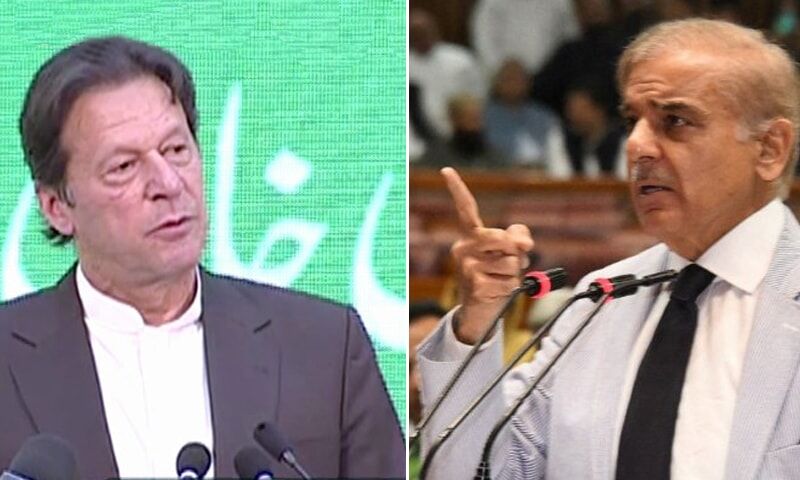
Web Desk (LTN NEWS): Prime Minister Shehbaz Sharif said that Imran Khan, the leader of the PTI, tried to negotiate with the coalition government a month ago through a business friend they both had.
During a conversation with the vloggers, PM Shehbaz said, “Khan wanted to talk to solve two problems: the date of early elections and the choice of chief of army staff.”
The prime minister said he did not want to talk to the PTI leader about these issues. However, he said, “I offered to meet about the Charter of Democracy and the Charter of Economy.”
He also said that the former prime minister wanted to suggest three names and that the current prime minister could also suggest three names. After that, the two could decide together.
“I thanked him and turned down his offer,” PM Shehbaz said. He also sent him a message telling him that the appointment of the army chief is constitutional and that it is up to the current prime minister to do so.
Read Long March to start again from Kamoke today.
General Qamar Javed Bajwa’s extended term as Chief of Army Staff (COAS) ends on November 29. The government has said that his replacement will be chosen promptly under the Constitution.
The Director-General of Inter-Services Intelligence (ISI), Lt Gen Nadeem Anjum, recently held an explosive press conference. The prime minister clarified that the spy agency head asked for his permission before holding his first press conference.
On October 27, the military spokesperson and the head of intelligence for the country exposed the PTI chairman’s story about a conspiracy against the Pakistan Army and the country. They said that Khan had offered General Bajwa an extension for an undetermined amount of time in exchange for helping him beat the no-confidence motion from the opposition parties.
Lieutenant-General Babar Iftikhar, in charge of Inter-Services Public Relations (ISPR), said that PM Shahbaz Sharif had been told about the press conference by the military’s media branch.
Lt. Gen Iftikhar said that the press conference was happening at a time when “it was important to present the facts correctly” so that people could tell the difference between “fact, fiction, and opinion.”
“Institutions, leadership, and even the chief of army staff have been wrongly blamed for making things very chaotic,” the DG ISPR said.








Your article helped me a lot, is there any more related content? Thanks! https://www.binance.bh/register?ref=JW3W4Y3A