
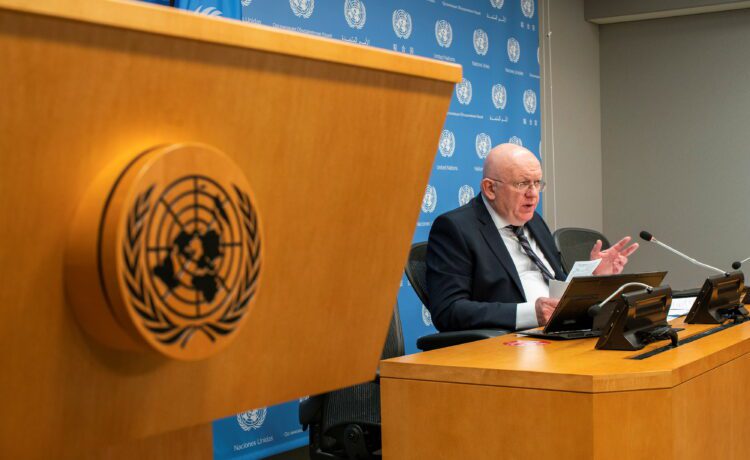
Web Desk (LTN NEWS): Diplomats told that the UN is going to stop letting 13 Taliban officials out of the travel ban unless the members of the Security Council can agree on a possible extension.
A UN Security Council resolution from 2011 says that 135 Taliban officials have to face sanctions like having their assets frozen and not being able to travel.
But 13 of them were let out of the travel ban so they could go to other countries to meet with officials from those countries.
In June, the 15-person Afghanistan Sanctions Committee of the UN Security Council took two Taliban education ministers off the list of people who were exempt from sanctions. This was done because the regime was taking away women’s rights.
At the same time, they extended the exemption for the others until August 19, plus an extra month if no member objected.
Diplomatic sources say that Ireland raised an objection this week.
China and Russia have asked for a longer time, while the US has asked for a shorter list of officials who can travel and places they can go.
Diplomatic sources say that the latest plan on the table would only let six officials travel for diplomatic reasons.
If no Council member says anything by Monday afternoon, it will go into effect for three months.
Between now and then, the 13 officials’ exemptions end at midnight on Saturday.
Among the 13 are Abdul Ghani Baradar, who is the deputy prime minister, and Sher Mohammad Abbas Stanekzai, who is the deputy minister of foreign affairs.
They played a big role in talks with the US government under then-President Donald Trump which led to a deal in 2020 that made it possible for the US to leave Afghanistan.
This week, a spokesperson for China’s UN mission, which currently holds the rotating presidency of the Security Council, said it was “counterproductive” for the West to say that the travel ban hurts human rights.
The spokesperson said that the exemptions are “as important as ever” and that if all the other members of the Council want to do is bring back the travel ban, “it’s clear that they haven’t learned a thing.”
Even though they said they would be more flexible when they took power in August of last year, the Taliban have mostly gone back to the harsh ways they ruled from 1996 to 2001.
In particular, they have severely limited the rights and freedoms of girls and women by telling them to wear burqas, stopping girls from going to school, and taking women out of Afghan workplaces in a systematic way.
So far, no country has acknowledged the government.