
Web Desk (Islamabad): A top government source confirms that Saudi Arabia is the first country to agree to join the IMF.
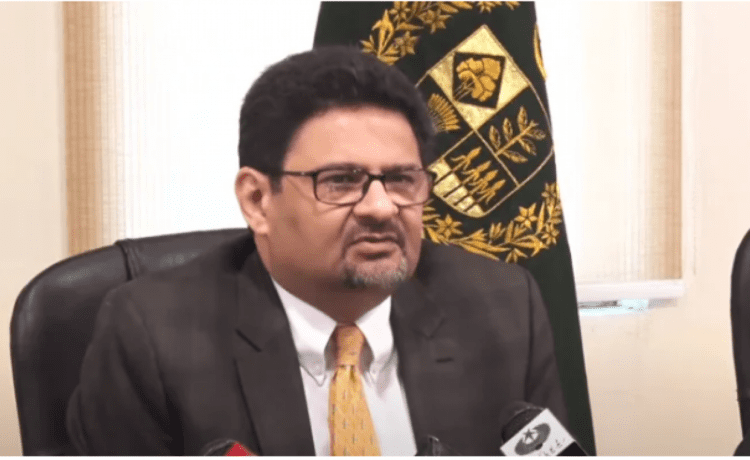
This week, friendly countries will promise Pakistan an extra $4 billion in funding. This will make it possible for the International Monetary Fund (IMF) program to start up again, said State Bank of Pakistan (SBP) Acting Governor Dr. Murtaza Syed on Wednesday.
A top government source revealed that Saudi Arabia is the first country to agree to make a commitment to the IMF.
In an exclusive interview with The Express Tribune, the acting governor said, “There are talks going on about different ways to get guarantees for a $4 billion loan, and we hope it will be done this week.” He also said that Pakistan was talking with China about getting more money.
Finance Minister Miftah Ismail told The Express Tribune that at least one country gave an assurance to the IMF on Wednesday, but he didn’t say what country it was.
In the same way, another high-level government official said that Saudi Arabia has promised to give money.
The governor and the finance minister made their statement after the IMF said it would call a board meeting to approve Pakistan’s request for the program to be brought back to life once it had gotten guarantees for the $4 billion in financing.
Now that the assurances have been given, the markets should no longer be uncertain, and the government and central bank should be in a good position to handle the current crisis.
Dr. Syed said that all the friendly countries’ executive directors have to do now is pick up the phone and tell Pakistan’s Mission Chief that they are willing to give a certain amount for 12 months.
The acting governor said that the IMF would call a board meeting in two weeks if Pakistan could show that it had enough money. He also said that Pakistan and the IMF have reached an agreement on the Letter of Intent, which will be signed as soon as the financing guarantees are made official.
At the board meeting, a $1.2 billion loan tranche will be approved. The program will also be extended until June of next year, and the total size will be raised to $7 billion.
The UAE was more interested in buying assets, and Saudi Arabia is willing to give loans and oil with delayed payments.
Pakistan is looking into different ways to ask China for money, such as cash deposits, commercial loans, and raising the limit on currency swaps between the two countries. The acting governor said that any of these can be made bigger.
“We talk to China all the time because we think currency swaps should also be used for trade between the two countries. China has seen that it is important for increasing trade between the two countries.
The acting governor said that Pakistan and the IMF are both responsible for getting $4 billion in the financing, but we have more of a responsibility because we need the money. Pakistan is also getting these promises with the help of the IMF.
Dr. Syed said that Pakistan has already raised $36 billion of the estimated $34 billion it needs from outside sources. The extra $4 billion is needed to build up the foreign exchange reserve.
He also said that the IMF thinks Pakistan’s foreign exchange reserves are “uncomfortable” and wants Pakistan to build up a little more cushion.
In response to a question, he said that there have been talks with Saudi Arabia about borrowing its special drawing rights, but that the IMF has not yet made a way to do that. Before the end of this year, the IMF is expected to come up with a final plan for how such a transaction would work. If Pakistan can borrow Saudi SDRs through the IMF, it should do so, said the acting governor.
Pakistan has lost a lot of foreign exchange reserves because the IMF program was late. The reserves, which were $17 billion in February, have been cut in half because of payments on debts to people outside of the country.
Dr. Syed also said that there is less political uncertainty now that the government has said it will finish its term in office.
The high current account deficit and political uncertainty seem to be getting under control, which also helped the rupee get stronger on Wednesday, the acting governor said. He also said that exporters sold their dollars on the market, which led to more money coming in. As a result, the rupee gained a record Rs10 to the dollar in a single day and ended the day at Rs229.
The overshooting of the rupee against the US dollar has begun to correct itself, and the governor hoped that it would recover in the next few months.
He said that the tightening of monetary policy and the tightening of fiscal policy under the IMF program will help reduce the current account deficit.
Dr. Syed said that the stronger US dollar against other currencies was to blame for about half of the drop in the value of the Pak rupee since December. The other half was due to the high current account deficit, how people felt about the IMF program and the lack of political stability.
During the last 1.5 months, both exporters and importers put off getting their money from exports, while importers rushed to get their goods.
The acting governor said that consumption and imports are the foundation of Pakistan’s economy. Since investment and savings are low, the current account deficit gets bigger when the economy grows faster.
In the short term, Pakistan has no choice but to get loans from other countries to meet its financial needs, he said.
The acting governor said that the restrictions on imports would be lifted in three months if things got better.