
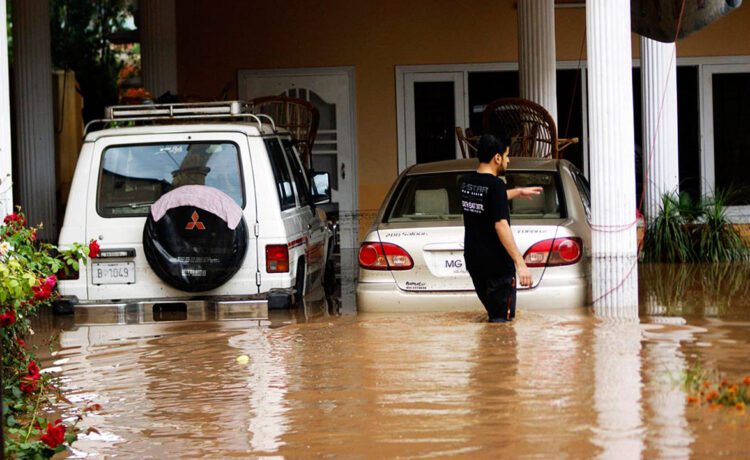
Web Desk (LTN NEWS): Pakistan’s government officially declared a “national emergency” on Thursday because of the floods caused by the monsoon rains, which have killed at least 937 people, including 343 children, and left at least 30 million people without shelter. The government called the floods a “humanitarian crisis of epic proportions” caused by climate change.
According to the most recent data from the National Disaster Management Authority (NDMA), 306 people have died due to floods and rain-related incidents since June 14. This is the most deaths of any province.
Balochistan had 234 deaths, while Khyber Pakhtunkhwa and Punjab had 185 and 165 deaths, respectively. During the current monsoon rains, 37 people died in Azad Jammu and Kashmir, and nine people died in the Gilgit-Baltistan region. During the same time period, one person died in Islamabad.
According to the NDMA, Pakistan got 166.8 mm of rain in August, which is 241 percent more than the average of 48 mm. It said that the monsoon floods were 784 percent worse in Sindh and 496 percent worse in Balochistan, which was the worst-hit areas.
Because of this, the unusually high amount of rain caused flash floods all over the country, especially in the south, which is still flooded, and 23 districts of Sindh have been declared “calamity-hit.”
• 937 people have died, and 30 million people have no place to live.
• As floods “submerge southern Pakistan,” 23 districts in Sindh have been called “calamity-hit”
• The government needs more than Rs72 billion for relief efforts and asks donors and the whole country to help.
Monstrous monsoon
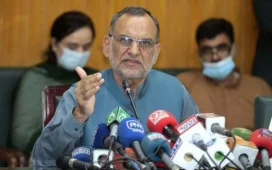
Sherry Rehman, the minister in charge of climate change, said that the prime minister had set up a “war room” at NDMA that would be in charge of all relief efforts across the country. She said that the nonstop “monstrous” rain had “made it hard to do relief work, especially with helicopters.”
During a press conference in Islamabad, the minister said, “Pakistan is in its eighth cycle of monsoon rain. Usually, the country only has three or four cycles of monsoon rain.”
“Pakistan is going through a monsoon spell that has never happened before, and data suggests that another cycle could start up again in September.”
Senator Rehman said earlier this week that the current situation is worse than the devastating floods of 2010. He did this by comparing the current situation to the floods of 2010. “The water isn’t just coming from the north as it did in 2010, but it’s also just as or even more destructive in its sweep and power,” she said.
The senator said that heavy rains had caused flash floods that wiped out bridges and communication systems in different parts of the country. “Nearly 30 million people have no place to live, and thousands of them have been forced to move and don’t have food,” she told reporters.
The minister said that the provinces had told him that the need for shelter and help was very great and that international donors should help. “The situation is still changing, and the needs assessments changed every day because it kept raining and flooding,” she said, adding that the number of homeless people was going up.
She said that Sindh had asked for one million tents and Balochistan had asked for 100,000 tents. She also said that all tent makers had been asked to help and that tents were also being asked for from outside donors.
A preliminary rapid needs assessment report from the government says that at least Rs72.36 billion is needed to help flood victims right away. The government needs Rs7.33 billion for food and cash relief right away, Rs8.713 billion for non-food items (NFIs), and Rs1.627 billion for health-related costs.
The government also needs Rs9.024 billion to make up for the loss of cattle caused by rain-caused floods. According to the initial estimate, the machinery and other equipment needed for relief efforts would cost Rs4.646 billion. At the same time, it would cost Rs41 billion, or Rs50,000 per house, to fix the damage done by the flood to at least 82,000 homes.
“Reach out to Pakistanis”
Information Minister Marriyum Aurangzeb, meanwhile, called on the “national spirit” and asked all Pakistanis, even those living abroad, to help their fellow countrymen at this crucial time.
She said in a statement that the whole country, but especially Pakistanis living abroad, should give generously to help the flood victims because it would take a lot of money to get them back on their feet after such a big disaster.
Ms. Aurangzeb also said that both the federal government and the provinces were working hard and that all the available resources were being used. The minister said that heavy rains and severe flooding were making it hard to help and that more money from the public was needed to speed up rescue efforts.
She also said that information about the Prime Minister Flood Relief Account 2022 and how to put money in it had already been made public.