
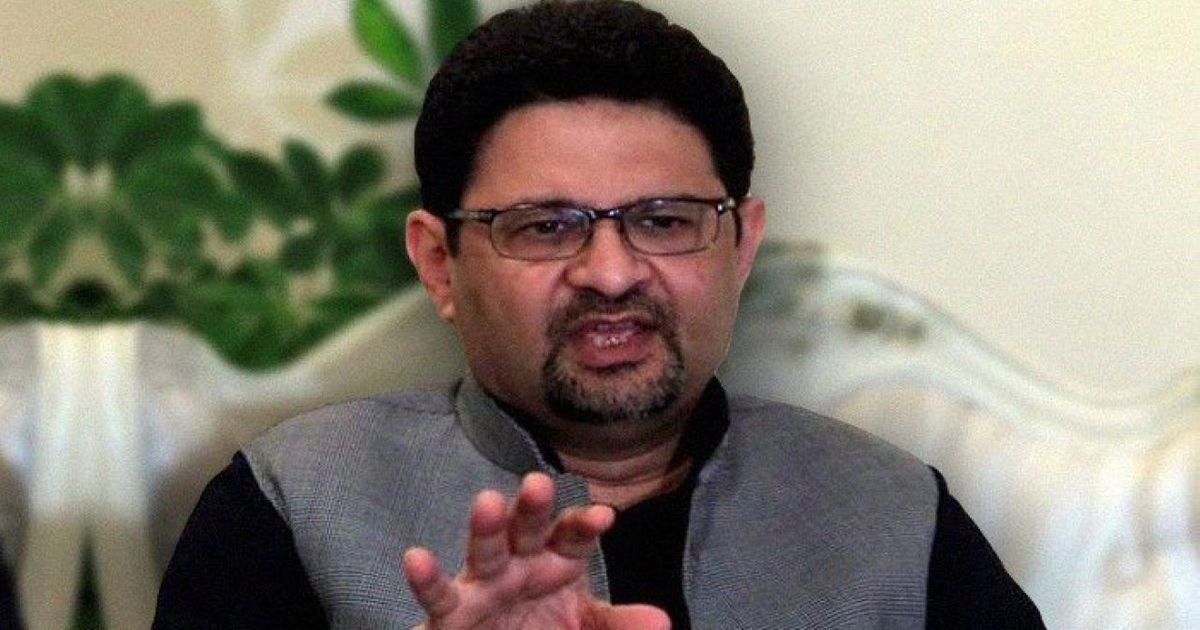
Even though Pakistan has had terrible floods, the finance minister said on Sunday that the country will “absolutely not” stop paying its debts. This shows that there won’t be any major changes to the reforms that are meant to help stabilize a struggling economy.
Floods have hurt 33 million people in Pakistan, caused billions of dollars worth of damage, and killed more than 1,500 people. This makes people worry that Pakistan won’t be able to pay its bills.
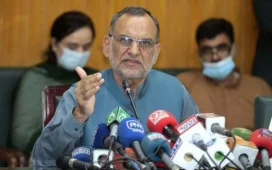
“Given the difficult situation, the path to stability was already narrow, and it has become even narrower,” Finance Minister Miftah Ismail told Reuters in his office. “But if we keep making smart decisions, which we will, we won’t go into default. “No way, no how.”
Pakistan was able to get back on track with a program from the International Monetary Fund (IMF) after it had been put off for months. This was made possible by tough policy decisions. But the good feelings didn’t last long before the terrible rain started.
Miftah Ismail said that most stabilization policies and goals were still on track, despite the disaster. This included plans to add to the country’s dwindling foreign exchange reserves. Even though the IMF gave the central bank $1.12 billion at the end of August, the reserves are still only $8.6 billion, which is only enough to pay for about a month’s worth of imports.
Read There is no chance of default in Pakistan: Miftah
The goal for the end of the year was to get the buffer to 2.2 months. He said that Pakistan will still be able to add up to $4 billion to its reserves, even if the floods cause the current account balance to drop by $4 billion because of more imports, like cotton, and less exports. But he thought that the floods would not cause the current account deficit to grow by more than $2 billion.
“Yes, the very poorest people have lost a lot, and their lives will never be the same again. But we are able to pay our foreign and domestic debts and keep our economy stable on a small, medium, and large scale.
Payment for December to be made
He said that the world’s markets were “nervous” about Pakistan because the country’s economy had lost at least $18 billion due to the floods and could lose as much as $30 billion.
“Yes, our risk of not paying our bills has gone up, and the prices of our bonds have gone down. But… I think the market will get back to normal in 15 to 20 days, and people will see that Pakistan is serious about being careful,” says Miftah Ismail.
In December, Pakistan has to pay back $1 billion in international bonds. Miftah Ismail said that payment would “absolutely” be made.
The IMF said on Sunday that it will work with the rest of the world to help Pakistan with its relief and rebuilding efforts, as well as its efforts to be sustainable and stable.
Miftah Ismail said that outside sources of funding had been found, such as the Asian Development Bank (ADB), the Asian Infrastructure Investment Bank, and the World Bank, which each gave more than $4 billion. This includes $1.5 billion coming from the Asian Development Bank (ADB) next month through the Countercyclical Support Facility, which is a budget support tool.
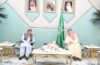
Miftah Ismail also said that Qatar, the UAE, and Saudi Arabia would invest about $5 billion in this financial year. The three said earlier this year that they wanted to invest in Pakistan, but no dates or exact plans have been shared yet.
He said that the UAE will “certainly” invest $1 billion in Pakistan in the next two months by buying shares on the stock market. He also said that the $3 billion that Qatar has promised to invest will all come in the financial year that ends in June 2023.
“They are looking at long-term leases at the three airports in Pakistan: Karachi, Lahore, and Islamabad. They are also thinking about buying two LNG (liquefied natural gas) plants, which he said will probably happen this year.
Miftah Ismail said that if $3 billion wasn’t reached by the end of the financial year, the extra money would be put into the stock market. He also said that the crown prince of Saudi Arabia had told Prime Minister Shehbaz Sharif that Riyadh would invest $1 billion before the end of the year.
On Sunday, Pakistan’s central bank said that Saudi Arabia’s development authority had also added a year to a $3 billion deposit that was due to end in December.
He said that soon a legal document would be signed with a “friendly country” to start an oil payment plan for $1 billion that would be paid over time.